
Arrest Warrants in Steele County
An arrest warrant is a judge's command to take a named person into custody. In Steele County, that order comes from District Court and is forwarded to the Sheriff for enforcement. Minnesota court rules demand probable cause first. The judge must see a complaint, supporting material, or sworn testimony before signing. The county names its triggers plainly. Failing to respond to the court is one. Failing to carry out a court order is another, and a probation officer's arrest and detention order lands in the same Sheriff's warrant system. Each category is a reason for the warrant, nothing more. If you find yourself in one of them, the real question is what the issuing court will do next.
When the Court Sends a Warrant to the Sheriff
One event leaves two paper trails in Steele County. The court file holds the complaint, the order, and everything filed after it. The Sheriff's enforcement record tracks the warrant as deputies work it, along with service notes. Updates do not move at the same speed. The county warns that court action and Sheriff database entries can lag each other, so two offices may give two answers on the same day. Call the right desk and say which one you need. Court Administration at 507-686-7012 handles the case file. The Detention Center at 507-446-7000 handles the posted county list. The Sheriff's main line at 507-444-3800 routes calls. Non-emergency dispatch answers at 507-451-8232.
Rule 3: Probable Cause and the Summons
Minnesota Rule of Criminal Procedure 3 governs how a Steele County case begins and when a warrant is allowed. Steele County judges work inside it too. The complaint, with supporting documents or sworn testimony, must establish probable cause. A summons comes first in the rule's preference. A warrant is reserved for listed exceptions, such as a substantial likelihood the person will not respond, an address that cannot reasonably be found, or a need to arrest to prevent imminent harm. The rule also spells out required contents. It describes how an officer executes the order. Any officer authorized by law may execute a warrant anywhere in Minnesota. The paper does not have to be in hand. Notice of the warrant and charge is required. Misdemeanor executions carry time and place limits, with exceptions the rule itself lists.
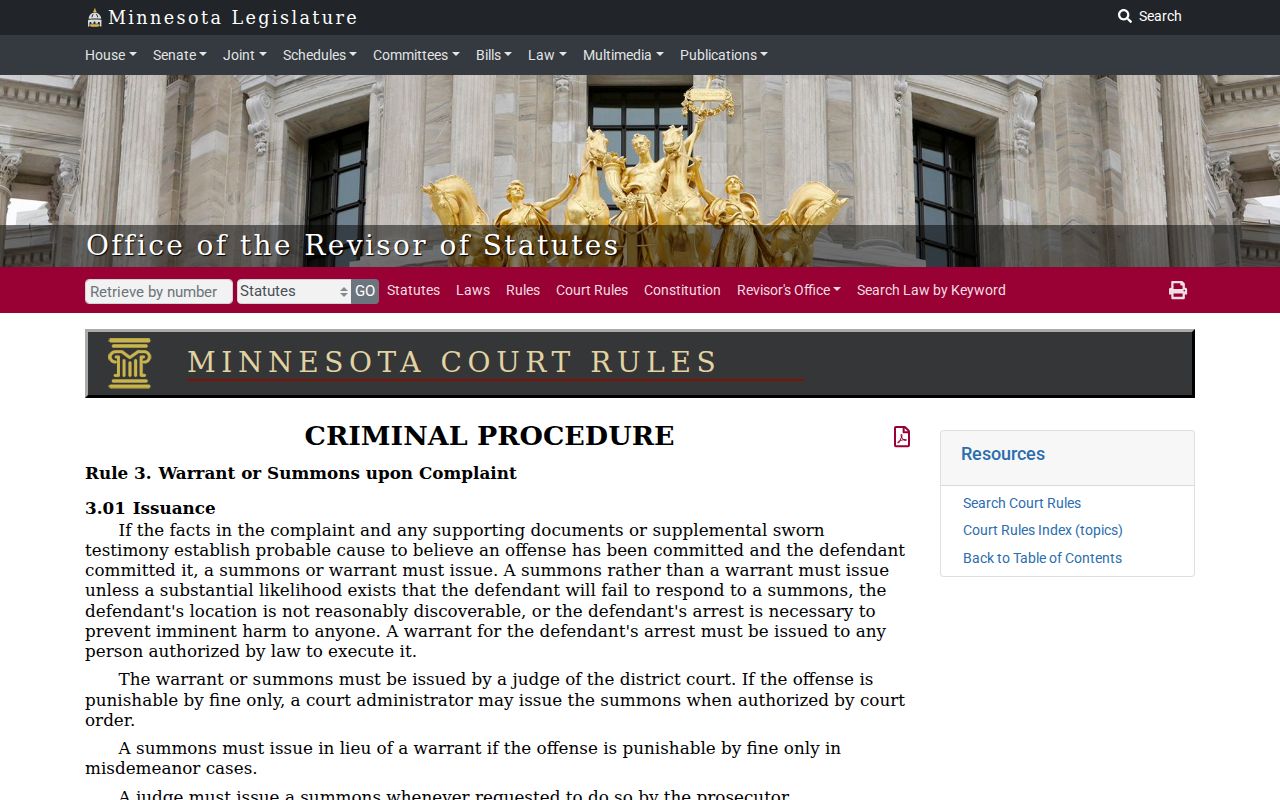
The text of Rule 3 is the statewide source for Steele County. Read it as procedure that applies here just as it does across Minnesota.
What a Steele County Arrest Warrant Contains
A warrant is a lean legal document. It names a person and an offense. Bail or conditions set by the judge appear too, but a Steele County warrant carries no narrative, no witness statement, and no release decision.
| Case and warrant number | The District Court file number and a warrant reference such as 2026-CR-00123 |
|---|---|
| Person named | The name or a description that identifies the person to be arrested |
| Offense | The charge named in the complaint |
| Issuing court | Steele County District Court, Third Judicial District |
| Bail or conditions | Any terms the judge set, when applicable |
| Execution directions | Instructions on bringing the person before a judge |
Rule 4: What Happens After an Arrest
Rule of Criminal Procedure 4 governs Steele County appearances after a warrant arrest. The person goes before a judge as the warrant directs. The rule sets first appearance, probable cause review, and the timing attached to each. For warrant arrests, the criminal rules use a 36-hour formulation. A separate 48-hour standard covers warrantless arrests. In Steele County, none of that touches the county's 9 a.m. list update. One is a court deadline. The other is a publishing schedule. Mix them up and people expect a web page to settle what only a judge and a calendar can decide.
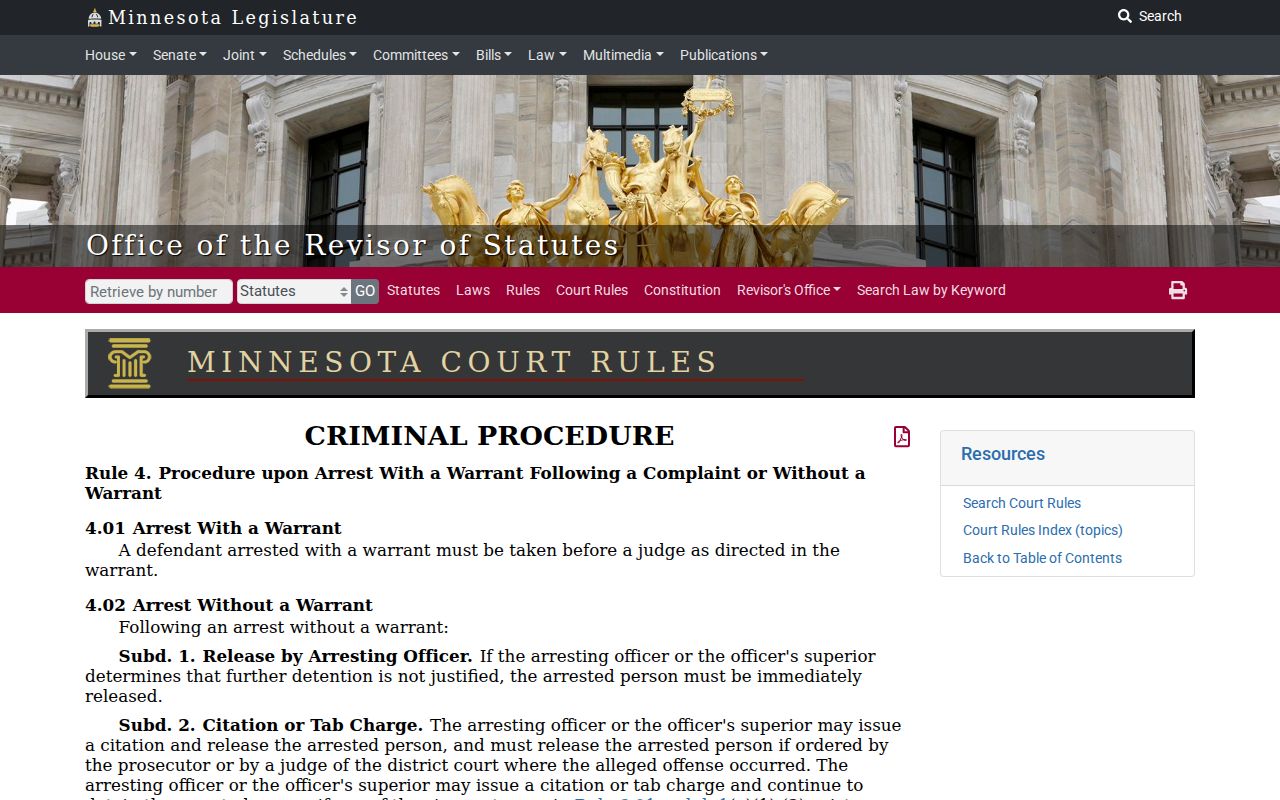
The rule text above governs appearances statewide. Read it as procedure, not as a prediction about one Steele County case.
How Steele County Arrest Warrants Are Served
The Sheriff's Office in Steele County enforces the orders the District Court forwards. Deputies act during ordinary work. The jail books anyone brought in under one. The Detention Center at 2500 Alexander St holds the facility side, rated for 154 beds. Age does not retire a warrant. No automatic shelf life applies here. An order that looks old stays enforceable until a court recalls or clears it. That is the practical point of any Steele County warrant check. A plan made with an attorney beats waiting for trouble to fade on its own.
Arrest Warrant vs Summons vs Bench Warrant
Minnesota starts cases with three different documents. A summons asks for an appearance, no arrest. An arrest warrant authorizes custody. A bench warrant, the third kind, follows a missed obligation inside a Steele County case that already exists.
| Document | When It Is Used | What It Means for the Person Named |
|---|---|---|
| Summons | The preferred route when the person is likely to appear | A notice to appear in court on a set date |
| Arrest warrant | A listed exception supports custody, after probable cause is shown | Officers may take the person into custody |
| Bench warrant | A court date or court order was missed | An existing case has an enforcement step attached |
| Sign-and-release warrant | A qualifying summons was returned undeliverable | Notice and release at the scene, not arrest |
Sign-and-release fits only qualifying cases, so confirm the exact order with the court before assuming it applies to a Steele County matter.
What the County List Leaves Out
Steele County publishes its warrant list with honest limits. It refreshes on weekday mornings, so a warrant signed later that day sits invisible until the next business day. The list can also drift from the court record and the Sheriff's own warrant system, and some enforcement categories may not show up at all. So a clean search means less than people hope. Nothing in a blank result proves the absence of an active warrant. Stale entries cut the other way too. An outstanding warrant can stay posted after the issuing court has recalled it, simply because the file was never refreshed. Anyone who resolved a matter should ask the Steele County court how updates flow to the list and hold onto the recall order or receipt that proves it.
Note: a warrant that does not appear on the posted list may still exist in the court file or in another county.
What to Do If There's a Warrant for You
Get advice before you draw notice to yourself. A warrant authorizes custody, and the Judicial Branch cautions that walking into a courthouse to clear one can end in arrest right there. A lawyer can tell you whether your Steele County case can be calendared, whether a motion to recall the warrant is realistic, and what a first appearance will look like. Until then, a few practical moves matter. Track down the case number. Stay away from situations that could lead to a police stop, and hold onto any paperwork showing steps you already completed. If the matter runs through probation, Community Corrections at 507-444-7720 is part of the routing. For legal help, the court contact page lists the Public Defender at 507-455-5887 and Southern Minnesota Regional Legal Services at 877-696-6529.
Important: A warrant does not go away on its own, and a payment or a phone call does not clear one. Talk with an attorney and confirm every step with the issuing court.
Federal Warrants and the District of Minnesota
Federal cases never pass through Steele County District Court. The venue here is the U.S. District Court for the District of Minnesota, whose records sit apart from the county list, the Sheriff's warrant system, and Minnesota Court Records Online. A federal prosecution can open with a complaint and affidavit or with an indictment. From there, the first appearance and detention questions follow federal rules, not county ones.
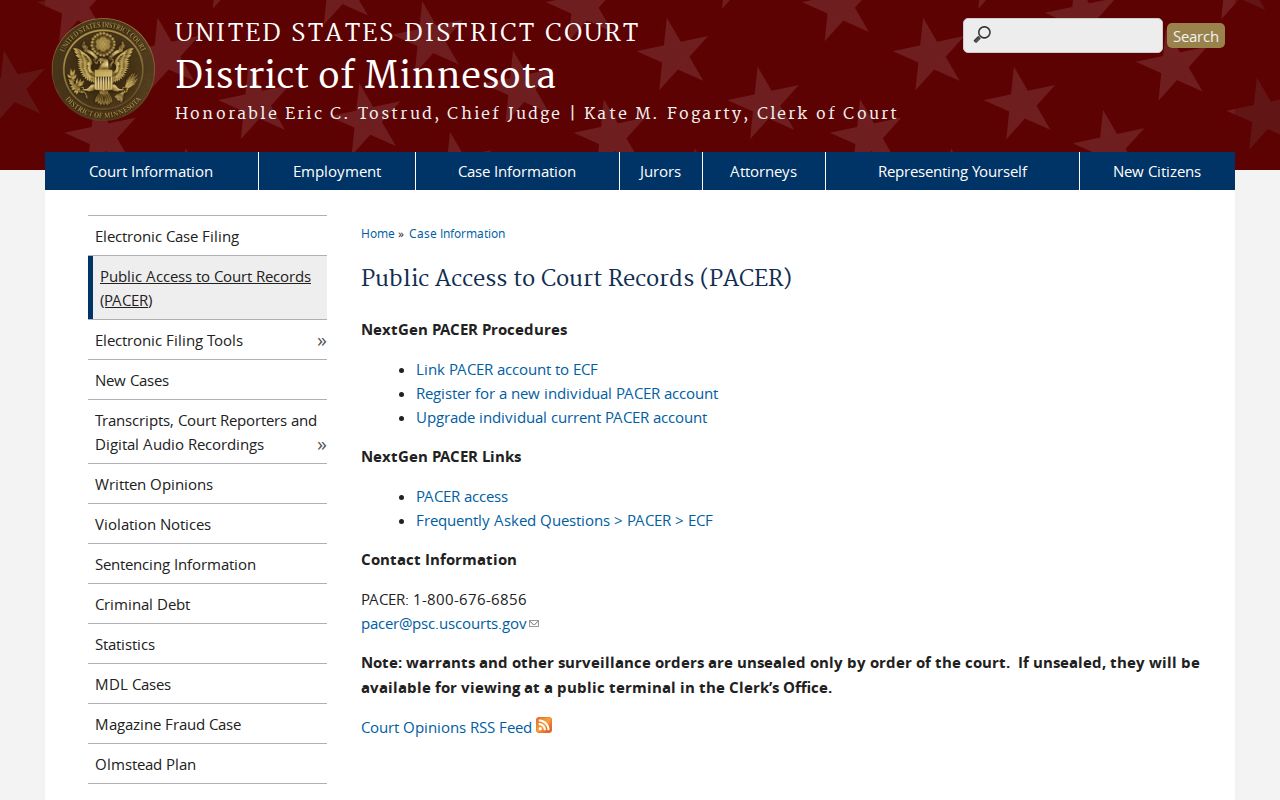
The federal court records page explains how PACER access works and notes that sealed warrants and surveillance orders open up only when a court orders them unsealed. Federal fugitive work falls to the U.S. Marshals Service district office and the North Star Fugitive Task Force, which covers all of Minnesota but posts no local roster. A Steele County search result never answers a federal warrant question.