
Bench Warrants in Steele County
A bench warrant follows a missed obligation, not a new charge. Steele County lays out the two common triggers in plain terms: failing to respond to the court, and failing to carry out a court order. Minnesota sources describe a third path, a warrant filed in the complaint itself, but that one is an arrest warrant rather than a bench warrant. Labels matter when you call around. Steele County custody records use the phrase bench warrant even though the county's own explainer page leads with arrest warrants. Some states call a fine-collection writ a capias. Minnesota offices do not use that word. Follow the local offices and you will see bench warrant, failure-to-appear warrant, or sign-and-release warrant instead.
image_after
Failure to Appear and Form 8
In Steele County, a failure-to-appear warrant comes to life on Form 8. The header names the court, the county, and the judicial district. Below that sit the parties, the district court file number, and the complaint or citation reference, plus the offense and the date the person failed to appear. The judge's requested warrant language and signature close it out. What the form really pins down is one missed date in one file. It does not attach to a person in the abstract, and that single distinction shapes everything a court later does with it.
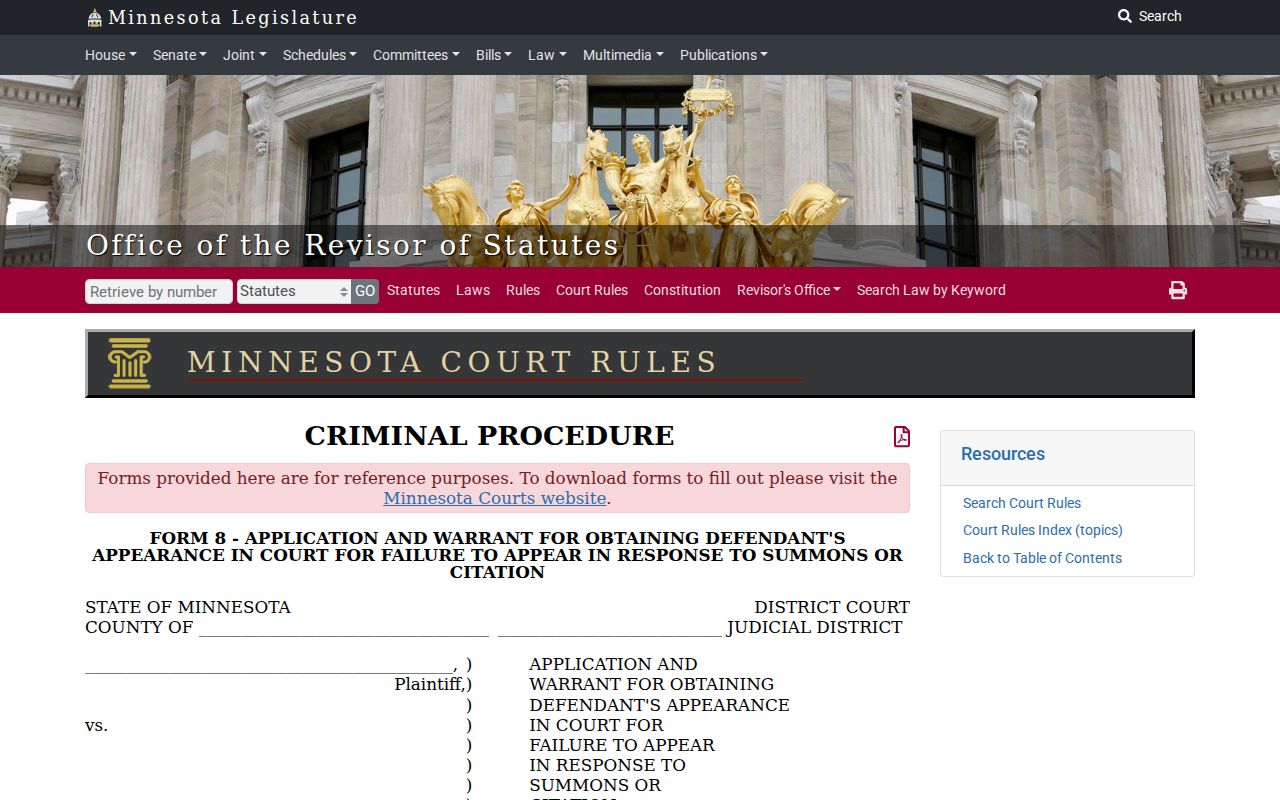
Minnesota publishes Form 8 with its court rules. The document is a blank model, though. It shows no Steele County case and reflects no completed warrant record.
How a Bench Warrant Is Issued
A citation or summons tells you when to appear or how to respond. Minnesota Rule of Criminal Procedure 6 builds the warning right into the citation text. The consequence is stated up front, before anything goes wrong. If the date passes with no response, the prosecutor or the court brings the missed appearance to a judge, who then decides whether to issue a bench warrant. Steele County also names a second path: failure to comply with a sentence or a court order. Either way, the paperwork lands in a file with a judge's signature behind it. Once issued, the warrant goes into the Sheriff's Office warrant system for enforcement, which is where an outstanding order stops being paperwork and starts being an active warrant.
Note: a missed date can be rescheduled in some cases before a warrant is requested, so calling the court quickly can matter.
Before You Appear in Person
One warning from the Minnesota Judicial Branch outranks every tip about walking into a courthouse or jail lobby. A person who appears in person to clear a warrant may be taken into custody. So call a lawyer first, not last. Then work through the sequence with that lawyer, and let counsel adjust the steps to fit the Steele County case at hand.
- Find the case number on the citation, summons, or court notice.
- Call Court Administration at 507-686-7012 and ask what the file shows.
- Ask what appearance, payment, or filing the court requires next.
- Ask whether the matter can be placed on a calendar without an in-custody appearance.
- Speak with an attorney about timing, custody risk, and any motion to recall the warrant.
Bench Warrant vs Arrest Warrant
In Steele County, both orders come from the same court but carry different histories. An arrest warrant begins with a charge and a probable-cause finding. A bench warrant begins with a missed obligation in a case that already exists. At a traffic stop the practical result can look the same, which is why people mix up the two terms.
| Point | Bench or Failure-to-Appear Warrant | Arrest Warrant |
|---|---|---|
| What starts it | A missed appearance or a court order that was not followed | A complaint supported by probable cause |
| Who asks for it | The court, on its own motion or at a request | The prosecutor, on the complaint |
| Paperwork | Minnesota Form 8 or a comparable order | The complaint and the warrant issued on it |
| Typical fix | Appearing, complying, or asking the court to recall it | Counsel, court appearance, and a release decision |
A probation detention order is a third category. Steele County enters those orders into the Sheriff's warrant system too, and they run on probation rules rather than a new criminal charge.
The Sign-and-Release Warrant
Minnesota law creates one narrow warrant category that catches people off guard. Under Minn. Stat. §629.415, a qualifying misdemeanor or gross misdemeanor matter can produce a sign-and-release warrant when a mailed summons comes back undeliverable and the person misses a first appearance. The statute says this warrant does not authorize arrest. The officer hands over a new notice, releases the person at the scene, and the record is updated to show the special status. A prosecutor can still show statutory grounds for another approach, and a court can still require bail based on victim safety or danger factors. Never assume a label tells you which kind of order is on file in Steele County. Ask the court directly.
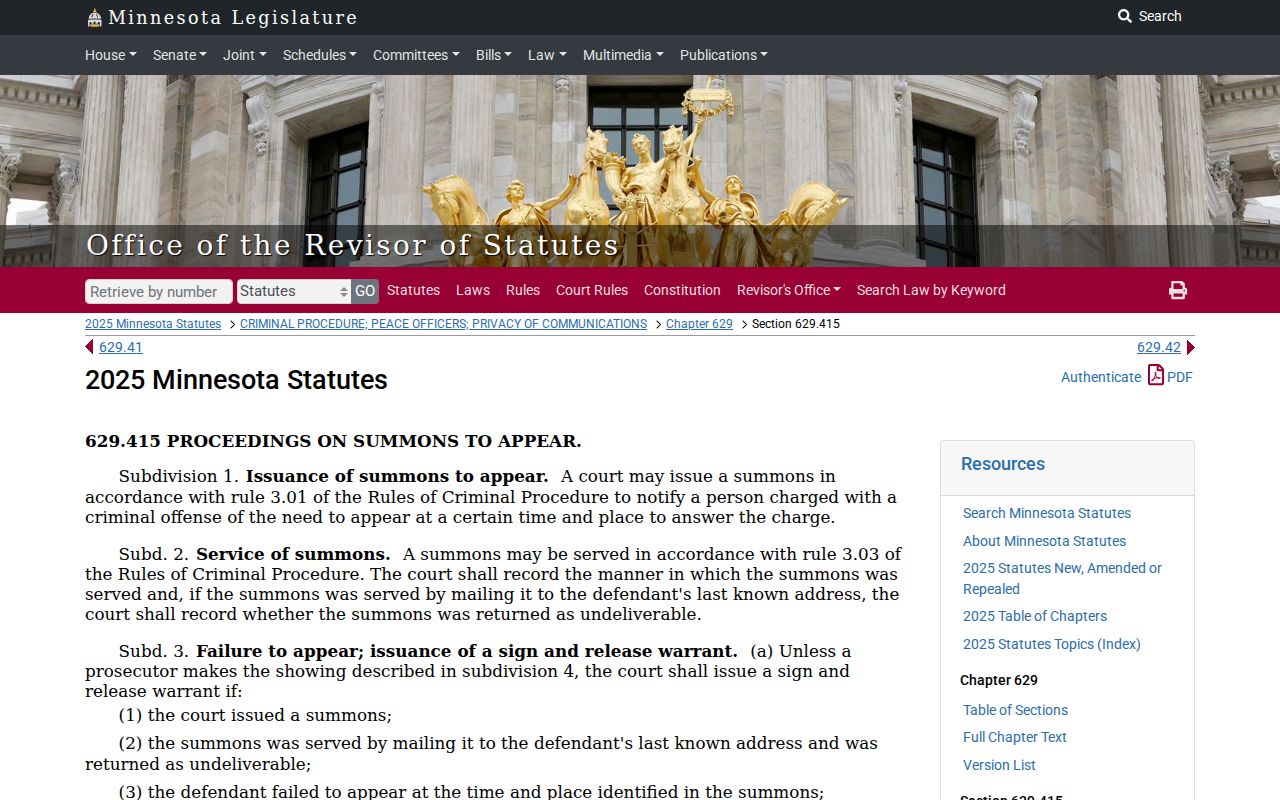
The sign-and-release statute above supplies the qualifying conditions and the notice process quoted here.
How to Resolve a Steele County Bench Warrant
Start with whichever office holds the file. Court Administration at 507-686-7012 keeps the court record for a Steele County bench warrant. The Detention Center at 507-446-7000 fields questions about the posted county list. When probation put the order in motion, Community Corrections at 507-444-7720 joins the routing, so ask which office controls the next step before you act. From there the paths branch. A person can appear on a new date, comply with the outstanding order, file a motion to recall or quash the warrant, or resolve the matter through a release decision in court. Nothing here is automatic. No phone call changes the posted list.
Caution: Paying a fine or attending a hearing does not by itself clear a warrant. Ask the court for the order that documents the change, then check how the county list gets updated.
Probation Arrest and Detention Orders
Steele County's warrant page names a category most warrant lists skip. A probation officer can issue an arrest and detention order. The Sheriff's warrant system then enforces it. It is not a bench warrant. It is not a new criminal charge either, but an enforcement step inside an existing probation case. That distinction changes who to call. Community Corrections at 507-444-7720 handles probation supervision, and a probation agent there can explain what the order requires. Counsel can explain what a violation finding would mean. The court still controls the record in Steele County, and any change to the order would be filed with that court.
Which Steele County Court Issued It
One trial court issues bench warrants here. Steele County District Court, part of the Third Judicial District, sits at 111 E Main St in Owatonna and holds original jurisdiction over the criminal, traffic, and ordinance matters filed in this county. No separate municipal or justice-of-the-peace court issues them. A city case still belongs to District Court. A warrant from another county stays with that county's court, which holds the file. Minnesota Court Records Online can surface the accessible case. You will need the file number. Federal matters belong to the U.S. District Court for the District of Minnesota.
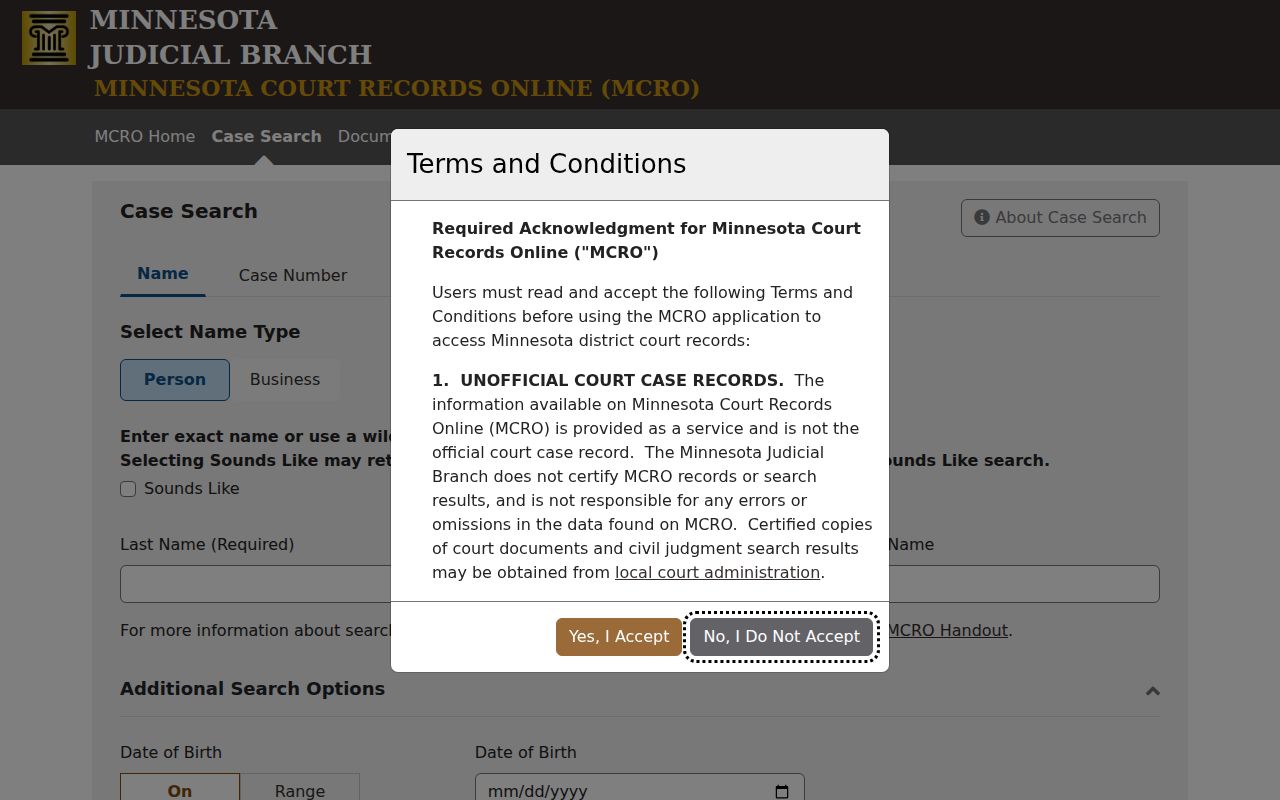
The statewide case search above is where a Steele County case number leads. Court Administration can confirm what the file shows once the case is found.
MCRO's Red W and What It Misses
Minnesota Court Records Online sometimes shows a red W inside a case. The letter alone settles nothing. The Judicial Branch explains that the indicator may relate to another case, and that the case details must be reviewed with the court. Treat a red W as a reason to look closer, not a finding about a Steele County case.
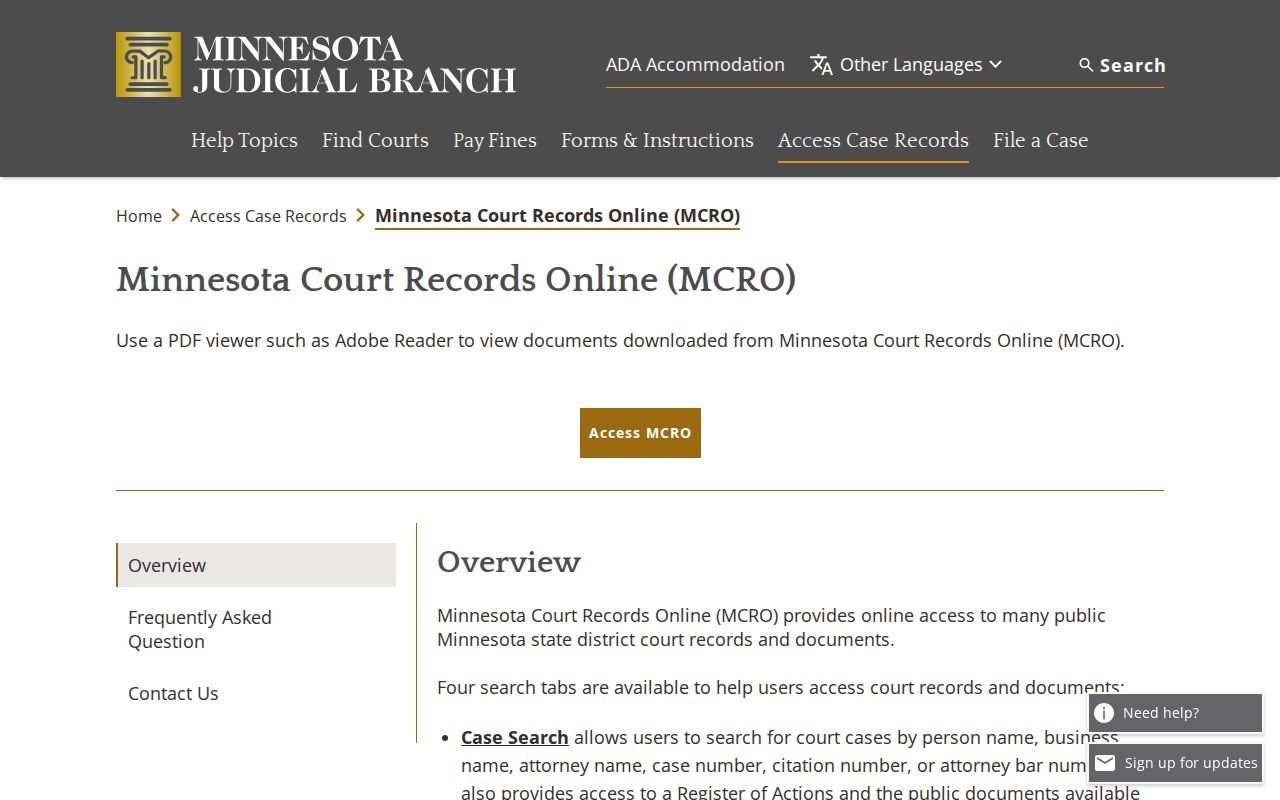
The Court Records Online overview carries that guidance, the four search tabs, and the limits on remote access. Some cases never appear online. Pending criminal, juvenile, and sealed records stay hidden. A courthouse terminal may show more. A Steele County search can still come back empty, and Court Administration is the office that explains why.